
Why Radio Stations Are Consolidating Tech Stacks in 2026
You aren’t just paying multiple invoices; you’re paying a “fragmentation tax” on your station’s time, data, and potential revenue. Here is the math on why 2026 is the year of consolidation.
It’s 9:15 AM. You have five tabs open, and none of them are helping you move faster.
- Tab 1: Posting a breaking news story to the website.
- Tab 2: Logging into a third-party podcast host to re-upload the morning show replay you just finished editing.
- Tab 3: Copying and pasting that same news headline into a separate email platform.
- Tab 4: Managing a new ticket giveaway in a standalone contesting platform.
- Tab 5: That’s the support ticket window for the mobile app provider who needs you to manually send them the assets you just put on your site.

This is radio’s “Franken-stack”; a collection of tools that technically work, but were never designed to work together.
The industry calls it vendor fragmentation. And as stations look ahead to 2026, more operators are realizing it isn’t just frustrating; it’s expensive, inefficient, and quietly taxing your time, your data, and your revenue.
The “Fragmentation Tax”
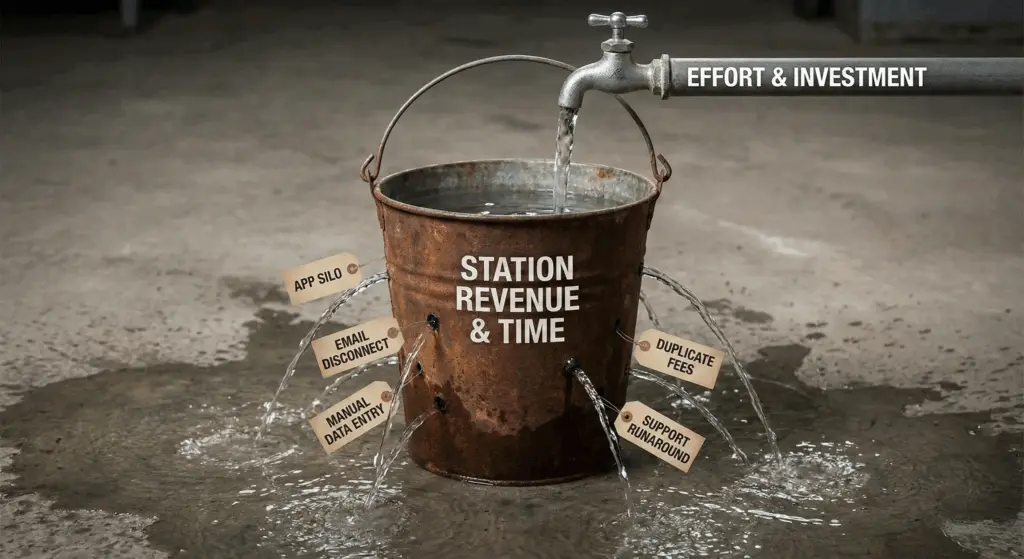
Many stations believe they are saving money by picking “best of breed” standalone tools. But when you add up the actual subscription costs (plus the premium add-ons required to make them function like a professional media entity,) the numbers tell a different story.
1. The Fragmented Stack (Monthly Baseline)
You need a website, an app, and a place for your podcasts. That’s the baseline.
| Service | Description | Est. Cost |
|---|---|---|
| Website CMS & Hosting | A decent WordPress setup with necessary premium plugins for security, forms, and speed. | ~$150/mo |
| Mobile App Provider | A standalone vendor for iOS and Android apps, separate from your website. | ~$300/mo |
| Podcast Hosting | A professional podcasting host with enough storage and bandwidth for daily show replays. | ~$100/mo |
| The “Baseline” Total: | $550/mo | |
But wait. That baseline doesn’t actually run a radio station’s digital strategy. You need to engage listeners. This is where the hidden costs of fragmentation truly explode.
2. The Essential “Add-Ons”
In a fragmented tech stack, every critical feature is an upsell or a totally separate vendor.
| Service | Description | Est. Cost |
|---|---|---|
| Email Marketing Platform | 25,000+ loyal listeners. Providers like Mailchimp or Constant Contact penalize success; the bigger your list, the higher your bill. | ~$275/mo |
| Third-Party Contesting | Secure, compliant contesting that captures data (instead of just a contact form). | ~$150/mo |
| Branded Streaming Player | A reliable, ad-free web player that isn’t just a generic pop-up. | ~$75/mo |
| School Closings System | A specialized tool critical for local news/talk, often requiring a niche vendor or custom dev work. | ~$100/mo |
| The “Real World” Fragmented Total: (Baseline + Add-Ons) |
~$1,150/mo | |
That is over $13,800 a year spent managing six or seven different logins, six or seven different support teams, and six or seven different billing cycles.
The Invisible Costs: Time and Data Silos
The financial math is compelling, but the operational math is even starker.
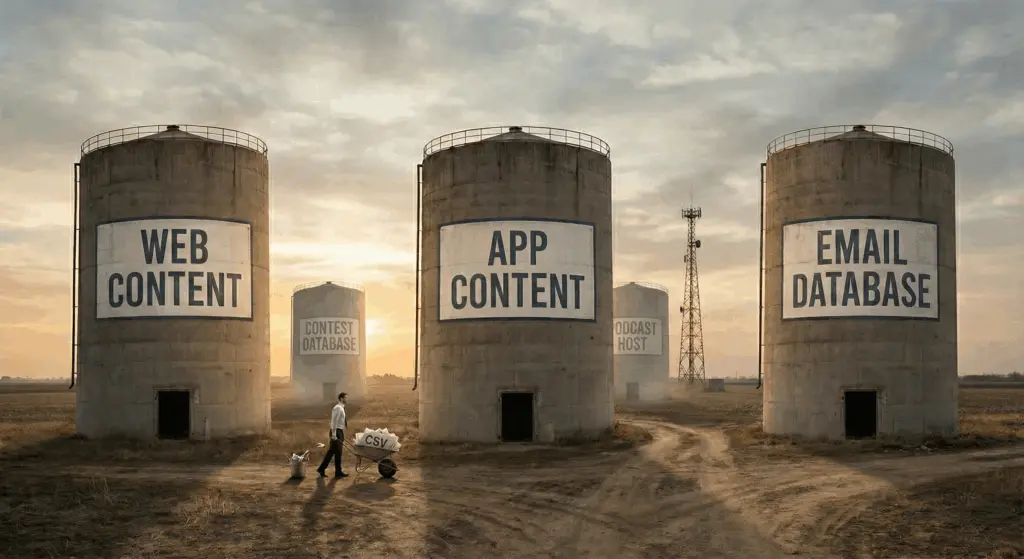
Every time your Digital Director has to download a CSV file from a contesting platform to upload it to an email platform, you are losing money in labor hours. Every time you publish a news story on your site, and then have to manually copy/paste it into your app dashboard, you are introducing friction.
In a fragmented stack, your data is trapped in walled gardens. Your app doesn’t know what your website is doing, and your email list doesn’t know who entered your contests.
In a consolidated stack, a story published once goes everywhere instantly: Web, App, and Social. Data is centralized, giving you a 360-degree view of your listener.
The Value of Consolidation
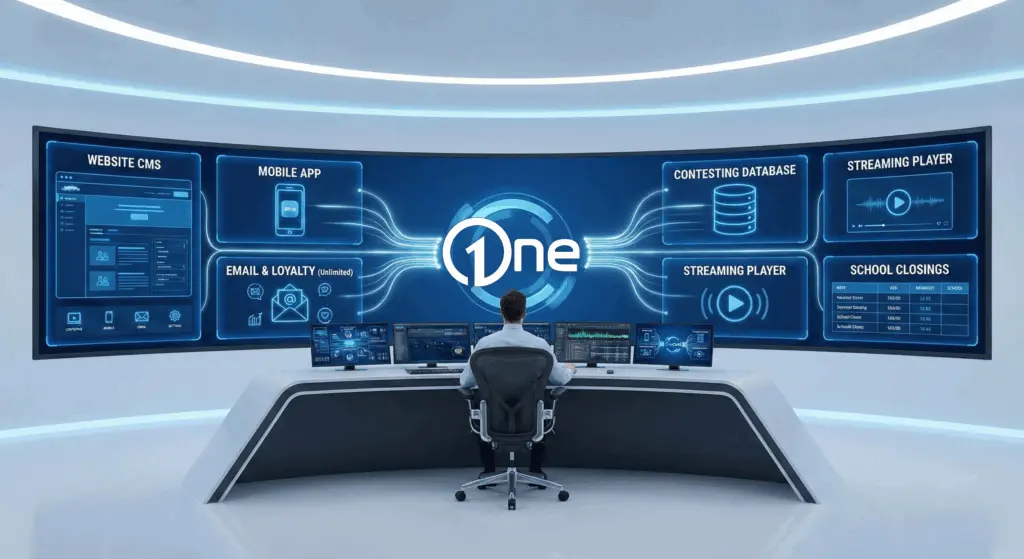
When you utilize an integrated platform designed specifically for broadcasters (like OneCMS,) you aren’t just buying a website or an app. You are buying an ecosystem where the pieces are designed to fit together without friction.
A consolidated approach changes the math entirely because the “premium add-ons” are now core features. With a consolidated stack, you eliminate the bloat:
No third-party fees. Built-in Email Blasting & Loyalty Club with unlimited subscribers. You shouldn’t be punished for growing your audience.
🎟️ Contesting
Built-in contesting means listener data flows directly into your station’s database, ready for sales and programming use immediately.
📻 Essentials
Features like a Free Streaming Player and a School Closings module are fundamental tools included in the platform.
Looking to 2026?
As you prepare your budgets and strategies, ask yourself:
Are you funding innovation, or are you just funding fragmentation?
Stop paying the fragmentation tax. It’s time to consolidate your stack, simplify your workflow, and turn your digital expenses into digital investments.